
 See My Latest Article on HelloNation
A heater that suddenly stops working can be unsettling, especially during a cold winter night. Before assuming the equipment has suffered a major failure, check a few basic conditions in a safe order. Many heating problems are caused by a tripped breaker, a dirty filter, an incorrect thermostat setting, or an interrupted fuel supply.
What should be checked first when the heater stops?
Start with the thermostat, power supply, and air filter. These checks are usually simple and can identify common problems without opening the heating equipment.
Set the thermostat to Heat and raise the temperature several degrees above the current room temperature. If the thermostat has a fan setting, choose Auto rather than On. A fan set to “On” may blow unheated air between heating cycles, which can make the system seem faulty.
Next, check whether the thermostat display is blank. A blank display may indicate dead batteries, a tripped circuit, or a loss of power to the heating system. If the thermostat uses batteries, replace them with the correct type.
Look at the electrical panel for a tripped breaker. A furnace or air handler may use a dedicated circuit. If the breaker is clearly in the middle position, switch it fully off and then back on once. If it trips again, leave it off. Repeated breaker trips can indicate an electrical or equipment problem and should not be bypassed.
Could the air filter be preventing heat?
Yes. A severely dirty air filter can restrict airflow and cause a furnace to overheat. Many systems respond by shutting off the burners or heating elements while the blower continues running, producing cool or lukewarm air.
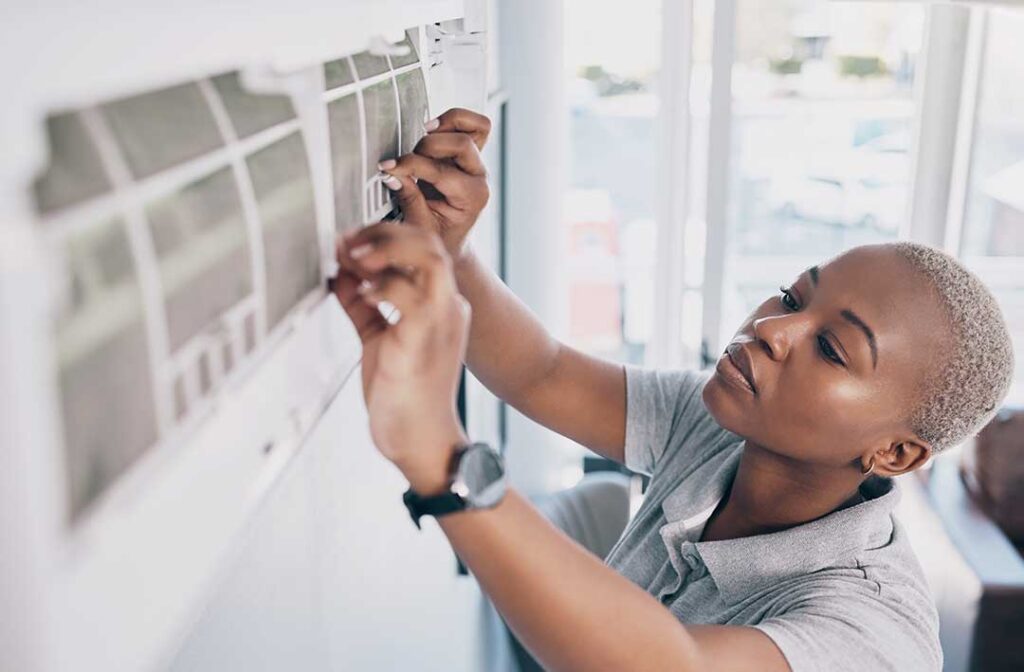
Turn off the system before inspecting the filter. If it is coated with dust, gray and clogged, or visibly difficult to see through, replace it with a properly sized filter. The filter should fit securely without bending or leaving large gaps around its edges.
A filter is not improved by choosing the highest possible filtration rating without considering the heating system. Dense filters can restrict airflow in some equipment. Use the filter size and type recommended for the system, and check it more frequently during periods of heavy winter use, construction dust, shedding pets, or indoor remodeling.
Replacing a filter may help with airflow, but it will not correct every cause of overheating. If the heater continues shutting down after a clean filter is installed, the problem may involve the blower, limit switch, ductwork, or another internal component.
What if the heater runs but the air is cold?
First, allow a short start-up period. Some systems blow room-temperature air briefly before warm air reaches the ducts. If the air remains cold, check the thermostat setting and filter.
For a gas furnace, confirm that the gas supply valve has not been accidentally moved. The handle is generally aligned with the gas pipe when open. Do not attempt to adjust gas controls inside the furnace cabinet.
If the system uses heating oil, propane, or another fuel, check the tank or supply indicator if it can be done safely. A depleted fuel supply can stop heat production. Fuel-related systems may also require resetting after delivery or interruption, but repeated resetting can introduce safety risks and should not be performed casually.
Heat pumps may produce air that feels less hot than furnace air, particularly during cold weather. That does not automatically mean the system is malfunctioning. However, air that is consistently cool, a system that runs without raising the indoor temperature, or an outdoor unit covered in heavy ice may indicate a problem.
Why is the heater running but not warming the house?
A heater can operate normally while losing much of its heat through restricted or leaking airflow. Check that supply registers are open and not blocked by furniture, rugs, or curtains. Make sure return-air grilles are unobstructed as well.
Closed registers do not necessarily redirect heat efficiently. They can increase pressure in the duct system and reduce overall airflow. In older homes, including many houses in the community, ductwork may pass through basements, crawl spaces, attics, or additions where disconnected joints and uninsulated sections can affect comfort.
Check whether some rooms are warm while others remain cold. Uneven temperatures may point to duct leakage, poor insulation, inadequate return air, zoning problems, or a thermostat located in a warmer part of the house. Cold rooms near exterior walls, windows, or additions may also lose heat faster than the rest of the home.
What heater noises require immediate attention?
Unusual sounds should not be ignored, especially if they appear suddenly or become louder.
- Rumbling or booming: May indicate delayed ignition or accumulated combustion debris in a fuel-burning furnace.
- Grinding: Can suggest a motor or bearing problem.
- Squealing: May come from a belt, blower motor, or moving component.
- Rattling: Could indicate a loose panel, damaged heat exchanger component, or debris.
- Repeated clicking: May be related to ignition, electrical controls, or thermostat cycling.
Turn the system off if there is a strong burning smell, loud banging, smoke, visible damage, or a noise that suggests metal is striking metal. A brief dusty odor when heat is first used for the season can occur, but a persistent burning or electrical odor is not normal.
What should be done if there is a gas smell or carbon monoxide concern?
Leave the building immediately if there is a strong odor resembling rotten eggs, which may indicate a natural gas leak. Do not operate light switches, thermostats, phones, appliances, or vehicles inside the building. Once outside and at a safe distance, contact the appropriate emergency gas utility or emergency services.
Carbon monoxide has no reliable smell. Possible warning signs include headache, dizziness, nausea, unusual fatigue, confusion, or multiple people and pets becoming ill indoors. Leave the building and seek emergency assistance. Do not re-enter until authorities say it is safe.
Carbon monoxide alarms should be installed near sleeping areas and on each level where required by applicable safety guidance. An alarm that sounds should be treated as an emergency, even if the heater appears to be operating normally.
When is it unsafe to keep troubleshooting?
Stop troubleshooting when the issue involves gas controls, combustion components, electrical wiring, refrigerant, a cracked or damaged flue, water near electrical equipment, or repeated breaker trips. Do not remove safety switches, bypass limit controls, disconnect wiring, or repeatedly reset ignition systems.
In a cold Massillon winter, protect vulnerable household members while the system is off. Use safe temporary measures such as extra clothing and blankets, but never use an oven, stovetop, outdoor grill, charcoal device, or fuel-burning appliance to heat the home. These can create fire or carbon monoxide hazards.
If indoor temperatures fall significantly, take steps to prevent frozen plumbing. Open cabinet doors below sinks on exterior walls, allow vulnerable faucets to drip when appropriate, and know where the main water shutoff is located. Pipes in unheated basements, crawl spaces, garages, and exterior walls may freeze before the rest of the home feels dangerously cold.
What information helps identify the problem?
Before further troubleshooting, record what the heater is doing:
- Whether the thermostat display is on
- Whether the system makes any sound
- Whether the blower runs
- Whether warm air appears briefly
- Whether a breaker trips
- Whether the problem affects the whole home or only certain rooms
- Whether any unusual odor, noise, moisture, or error code is present
- When the air filter was last replaced
This information can help distinguish a thermostat or airflow issue from a fuel, electrical, ignition, or mechanical problem. It also reduces the chance of repeatedly restarting equipment that may need to remain off for safety reasons.